

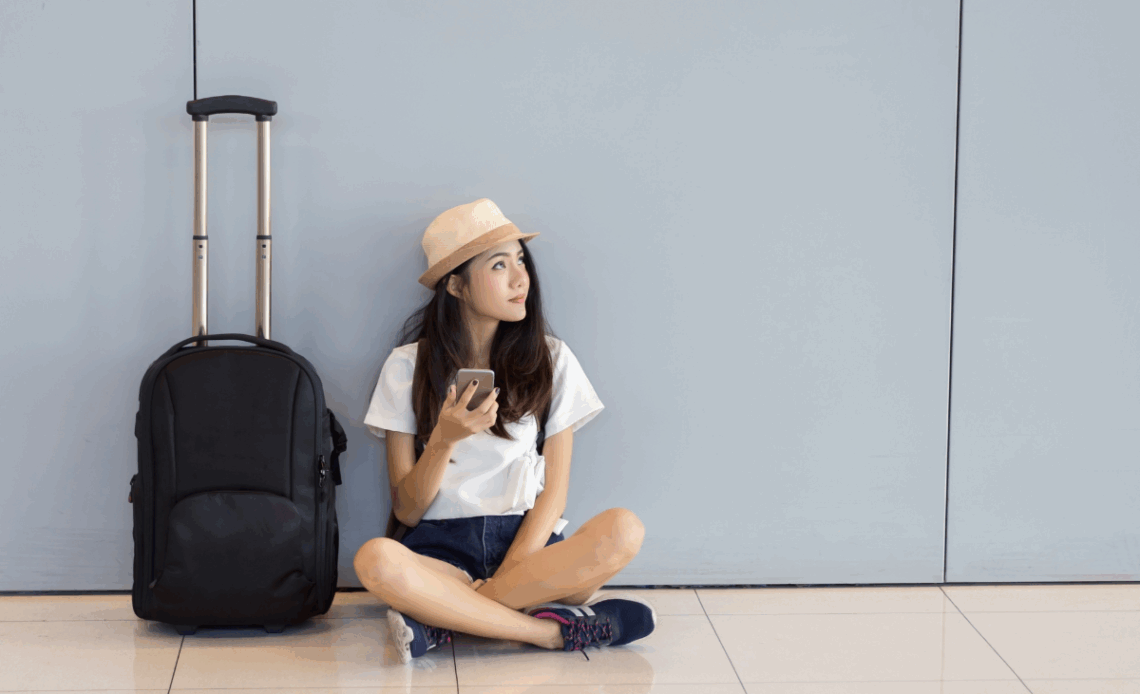
It begins with the scent—sizzling satay smoke curling through the humid evening air at Maxwell Food Centre, blending with the tang of chilli crab and the sweetness of pandan desserts. The rhythmic whoosh of MRT doors punctuates the background hum of the city, while the skyline glitters like an ultramodern constellation. Singapore—a city of precision, gleaming towers, and meticulously choreographed systems—isn’t just a place to visit. It’s a city that asks you to listen. Especially when you’re alone.
But what happens when you throw away the carefully curated itinerary and let yourself wander this highly structured city with no agenda but your own curiosity? When you trade guided tours for quiet benches and group selfies for reflective glances in glass-fronted skyscrapers?
In Singapore, a place where every train arrives on time and each corner is mapped, solo travel becomes paradoxically liberating. Its safety, cleanliness and efficiency provide a stable foundation, but it’s the city’s diversity, spontaneity, and pulsating energy that propel you into moments of self-discovery.
This isn’t a story about being brave or adventurous. It’s about rediscovering yourself in one of the world’s most surprising solo travel destinations.
The Art of Solitude in a Crowded City
At first, solitude in a city can feel like a misstep—especially when everyone else seems coupled, grouped, or hurriedly in sync with a schedule. You might fumble with your tray at a hawker centre, awkwardly choosing a table amid the cacophony of lunchtime chatter. You sit down with your bowl of fishball noodles and wonder if people are noticing your aloneness. Spoiler alert: they’re not.
Dining alone, especially in such vibrant surroundings, challenges the social norm that eating is a communal act. But it’s here—in the sticky warmth of midday, chopsticks in hand, sweat beading down your back—that you start to savour more than just the food. You begin to relish your own company.
Solo moments stretch longer in Singapore, inviting you to explore without urgency. At the Botanic Gardens, you might find yourself on a quiet bench under a canopy of Tembusu trees, watching joggers pass and dragonflies skim the lake. There’s no agenda, no one nudging you forward. Just the rustling of leaves and the comforting hum of life continuing around you.
Without conversation to fill the silence, you start to hear your own thoughts more clearly. You stop performing, stop editing your experience for someone else. In this silence, the city doesn’t fade—it expands. And so do you.
Finding Your Voice (and Your Way)
Singapore is often praised for being easy to navigate—and it is. But when you’re alone, even the simplest journey becomes an adventure. You’re no longer relying on someone else to lead the way. You are the compass, the guide, and the decision-maker. And sometimes, you get it wrong.
Maybe you board the wrong MRT line and end up two stops past your destination. Maybe your GPS goes rogue in the concrete maze of Marina Bay. Or maybe you simply take the long way round because a colourful side street catches your eye. Regardless, each misstep is a lesson in trust—trusting your instincts, your adaptability, your problem-solving abilities.
You learn the rhythm of the MRT map, the logic of Singapore’s grid, and the unspoken etiquette of escalator sides (always stand on the left!). Slowly, you shed the hesitations of “Can I?” and embrace the satisfaction of “I did.”
There’s a small triumph in mastering your own day. You find Haji Lane not because a guidebook told you to, but because you followed the scent of artisanal coffee and the beat of indie music. You strike up a chat with the barista, who tips you off to a nearby mural tucked behind a quiet shophouse. You’re not following a script—you’re writing your own.
The Unfiltered Connection
The irony of solo travel is that it often makes you more open to connection than group travel ever could. Without a friend as a buffer or a partner as a social crutch, you’re naturally more attuned to your surroundings—and to the people within them.
Singapore’s multiculturalism becomes more than a fact—it becomes a dialogue. A chat with a Malay auntie about sambal recipes turns into a deeper appreciation of the kampong spirit. A Tamil uncle at Tekka Market tells you about his childhood in Little India, painting a picture of Singapore long before the skyscrapers rose. Each conversation is a mirror reflecting not just the city’s soul, but your place in it.
There’s something beautifully human about these encounters. They are unforced, brief yet memorable. A shared laugh with a street vendor who playfully guesses where you’re from. A German backpacker you meet at your hostel who joins you for a night walk at Clarke Quay. A Chinese uncle who insists you try the roasted duck at his favourite stall, then walks you there himself.
These moments aren’t scheduled. They don’t appear on any Google Map. But they’re the ones you carry home.
Conclusion: Returning Home with an Expanded Self

By the time you board your flight home, Singapore may still be buzzing just as loudly as when you arrived—but you, quietly, have changed.
You’ve gone from tentative steps to confident strides. From filling silence with noise to embracing it. From needing external validation to finding your own approval. The city, with its juxtaposition of ancient temples and futuristic skylines, mirrored your own evolution—showing you that structure and spontaneity can coexist. That being alone doesn’t mean being lonely.
Singapore didn’t change you. It simply gave you the space to uncover what was already there.
Because solo travel isn’t about escaping your life. It’s about returning to it more fully. With clearer eyes, a stronger voice, and a deeper understanding of who you are when no one is watching.
And the best souvenir? It isn’t the orchid-scented perfume from Bugis Street or the tote bag with a Merlion on it. It’s the confidence to walk into any room, any city, any life—alone, but never lost.